
Meet dots: ChatGPT just hired a coworker that never clocks off
OpenAI's new agents don't wait for you to ask. They just keep working.
For years, ChatGPT has worked the same way: you type, it answers, and then it sits there until you type again. On September 29, 2026, at its DevDay conference in San Francisco, OpenAI broke that pattern.
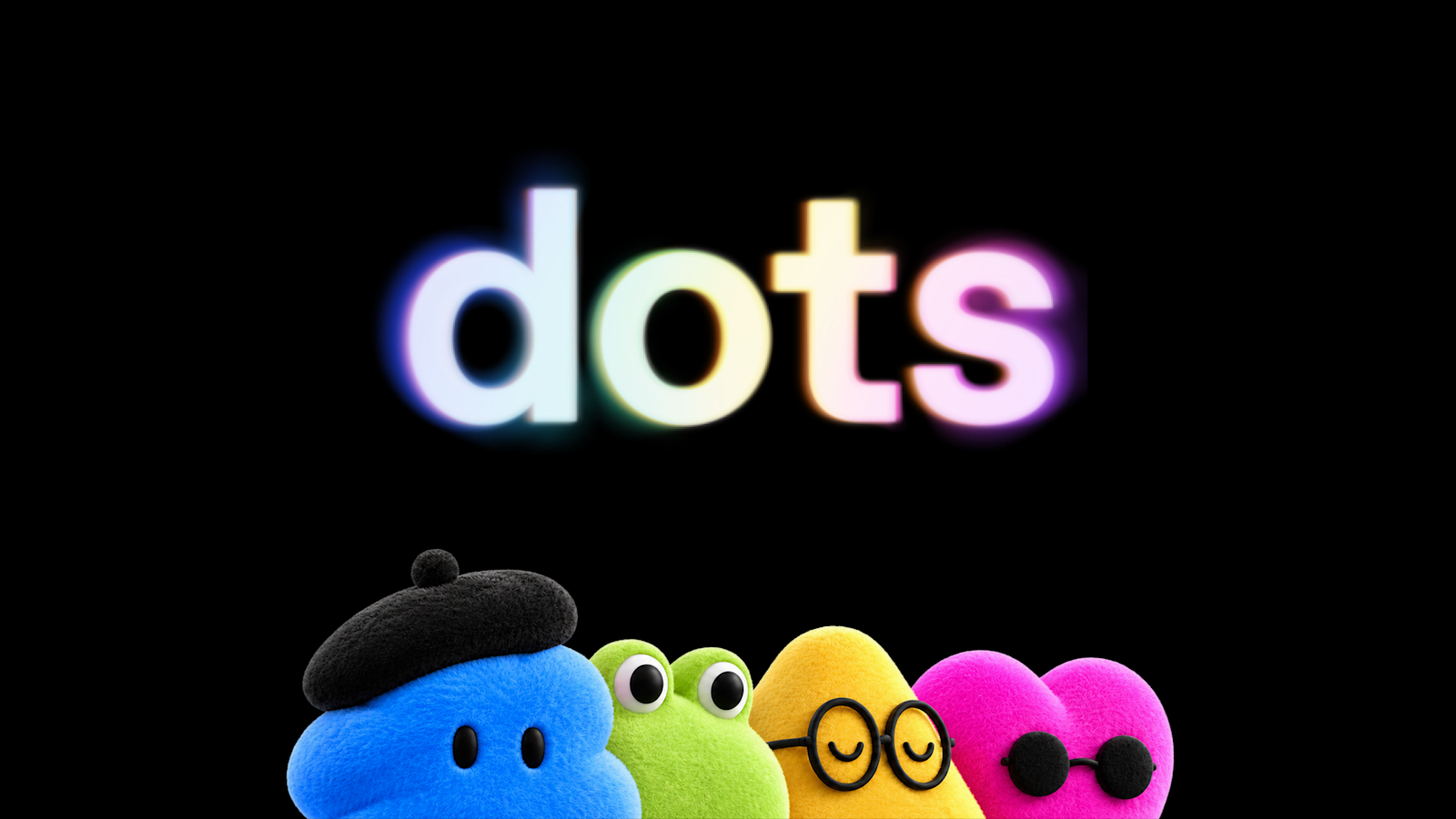
Meet dots (OpenAI writes it in lowercase). A dot is an always-on AI agent that lives inside ChatGPT. You don't give it a question; you give it a job. Then it keeps chipping away at that job between conversations, even when your laptop is closed.
OpenAI calls them agents built to handle everything. That's a big promise, so let's look at what's actually under the hood.
So what exactly is a dot?
Think of a dot as a digital assistant with its own desk. Every dot gets:
- Its own cloud computer and browser. It can surf the web, run software and keep files, all on OpenAI's servers, so it works while you sleep.
- Access to your apps. Through OpenAI's plugin ecosystem, a dot can connect to more than 4,000 apps: Gmail, Google Drive, GitHub and the like.
- A memory of its own. It keeps notes on your preferences, decisions and ongoing work, on top of ChatGPT's regular memory.
- A face. Each dot is a cute, round cartoon character you name and style yourself. OpenAI's examples include a pink one called Iggy and a green one called Todd.
Under the hood runs GPT-6 Astra, OpenAI's current flagship model. You can reach the same dot in ChatGPT on desktop, web and mobile, in Slack and Microsoft Teams, or simply call it for a voice chat. Texting is listed as coming soon.
A boss, not just a worker
The clever bit is that a dot acts more like a project manager than a typist. For heavy lifting, it can split work across background agents, or hand coding jobs to OpenAI's Codex and other tasks to ChatGPT Work. It then checks what comes back and reports to you.
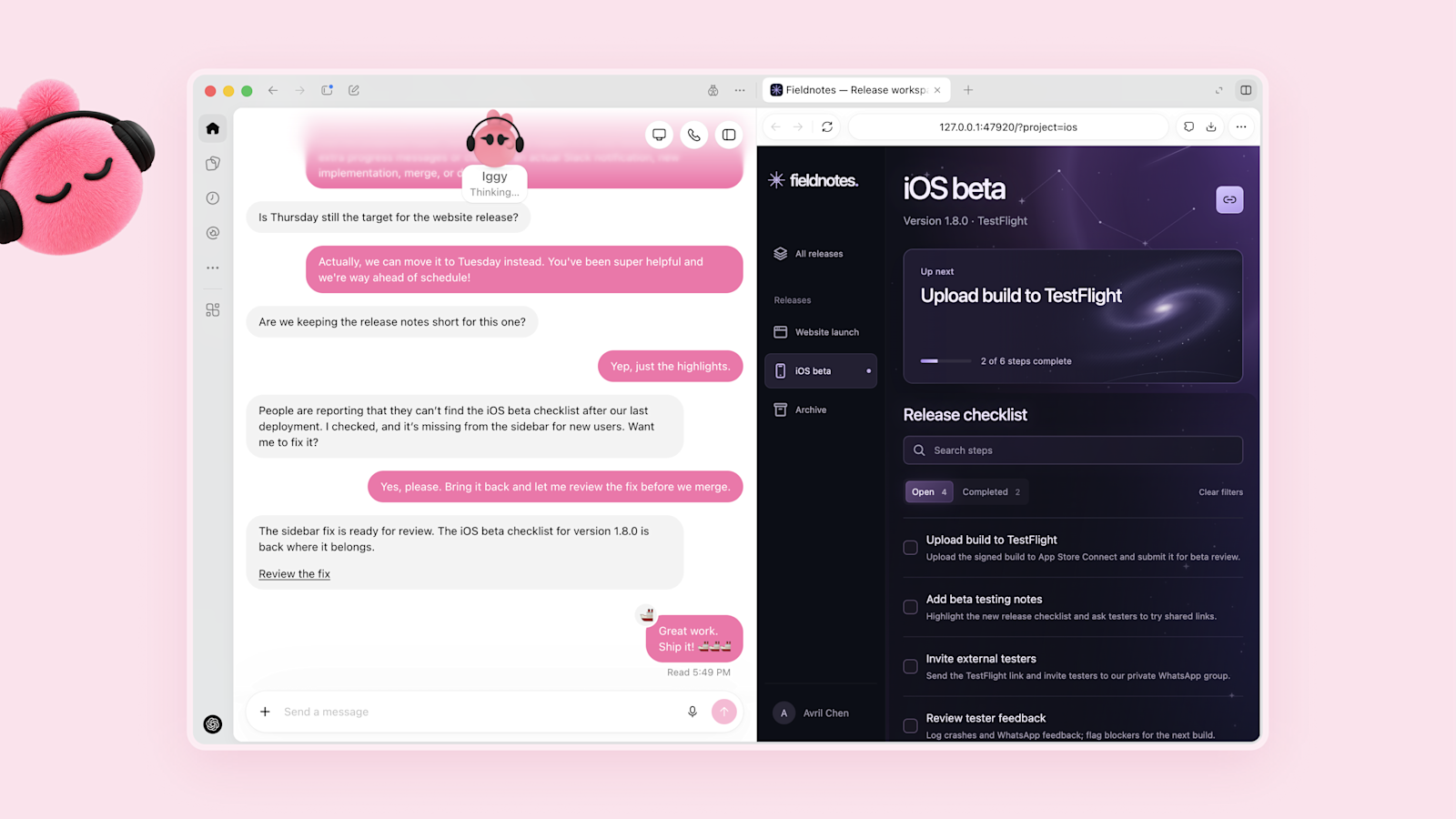
OpenAI's own examples are all long-running jobs:
- For a developer: watch customer feedback, build and test small bug fixes, and deliver ready-to-review pull requests with videos of the changes.
- For a scientist: rerun analyses when new data arrives and update the figures for a paper.
- For a launch team: revise the marketing materials when the product's scope changes.
- Inside OpenAI: when a bug report lands in Slack, dots start investigating right away.
My favourite example is the smallest. One early tester's dot noticed he had forgotten to invoice a publication. It prepared the invoice and sent it once he said OK. He never asked it to.
That's what OpenAI calls "proactive research": when you're not talking to it, your dot browses through your connected apps looking for ways to help.
Wait, an AI that acts on its own?
Yes, and OpenAI clearly knows that makes people nervous. Most of the announcement is about the guardrails:
- Read-only snooping. During proactive research, a dot can only read. It can't send messages, change anything in your apps, or control a browser or computer.
- Custom Rules. You decide, action by action, whether your dot may act freely, act only when told, ask first every time, or hand the job back to you.
- Auto-review. Before anything that touches your accounts or shares information, like sending an email, a separate check compares it with your instructions and rules.
- Some things always stay with you. Changing a password or moving money is always handed back to you.
- A safety monitor can pause or stop a dot if something looks wrong.
OpenAI's own fine print is refreshingly blunt: dots can still make mistakes, so review anything important. There are also rough edges. You can't view or delete a single thing your dot has learned about you; the only full reset is deleting the dot. And OpenAI hasn't said what the usage allowance looks like after the first month.
Who can get one, and the catch for Norway
Dots are rolling out gradually to ChatGPT Pro and Business Premium subscribers, with a beta that Enterprise admins can switch on. Free, Go and Plus users are left out for now, and so is anyone under 18.
Your first dot is included in the plan at no extra cost, and chatting with it doesn't count against your ChatGPT usage limits. Business Premium runs $100 per user per month billed yearly, or $125 monthly. OpenAI says you'll later be able to buy extra dots, or pay to make yours faster and busier.
Now the catch. At launch, Pro users in the European Economic Area, Switzerland and the UK can't get dots. Norway is in the EEA, so a personal Pro subscription here won't unlock one yet. Business Premium, however, is rolling out in all supported ChatGPT regions, Norway included.
Why this matters
- ChatGPT is leaving the chat window. It's turning from something you visit into something that works for you in the background.
- The agent race is heating up. Dots arrived three weeks after Meta launched its own personal agent, Muse, and OpenAI is already previewing "specialist dots" for companies, managed through Microsoft's Agent 365.
- Trust becomes the product. An assistant that reads your email all day is only as good as the rules around it.
The takeaway: Dots are OpenAI's boldest bet yet that the future of AI isn't answering questions, it's owning tasks. If they work as promised, your to-do list might start shrinking on its own. Just keep an eye on what you let them touch.
Sources: OpenAI: Introducing dots · OpenAI Help Center · Tom's Guide · Flavio Copes: A deep dive into OpenAI dots · PYMNTS