Tesla's flying Roadster: it drove upside down, kickflipped over five cars and stuck the landing
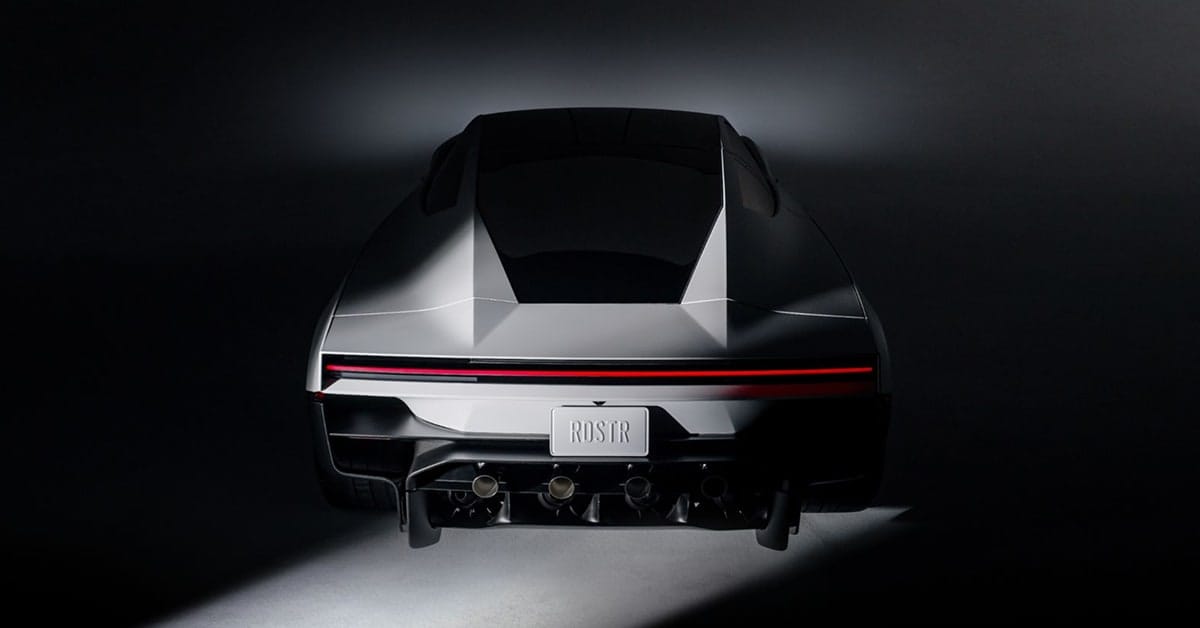
Nine years late, and it showed up flying.
Tesla first teased its second-generation Roadster back in November 2017 and promised it for 2020. Delay followed delay, and even this year's reveal slipped from April to August to October 1, before bad weather pushed it once more. On the evening of October 15, 2026, Elon Musk finally pulled the cover off, and nobody was talking about the delays afterwards.
The show took place outdoors at SpaceX's rocket test facility in McGregor, near Waco, Texas. Instead of a slow spin on a turntable, the crowd got two stunts that looked more like a James Bond film than a car launch.
Stunt one: the ramp
The white Roadster drove up a curved ramp until it was hanging upside down, held in place by powerful fans sucking it against the surface. Then it rolled off the end, flipped through the air, and used small jets of compressed gas to land neatly on its wheels.
Stunt two: the kickflip
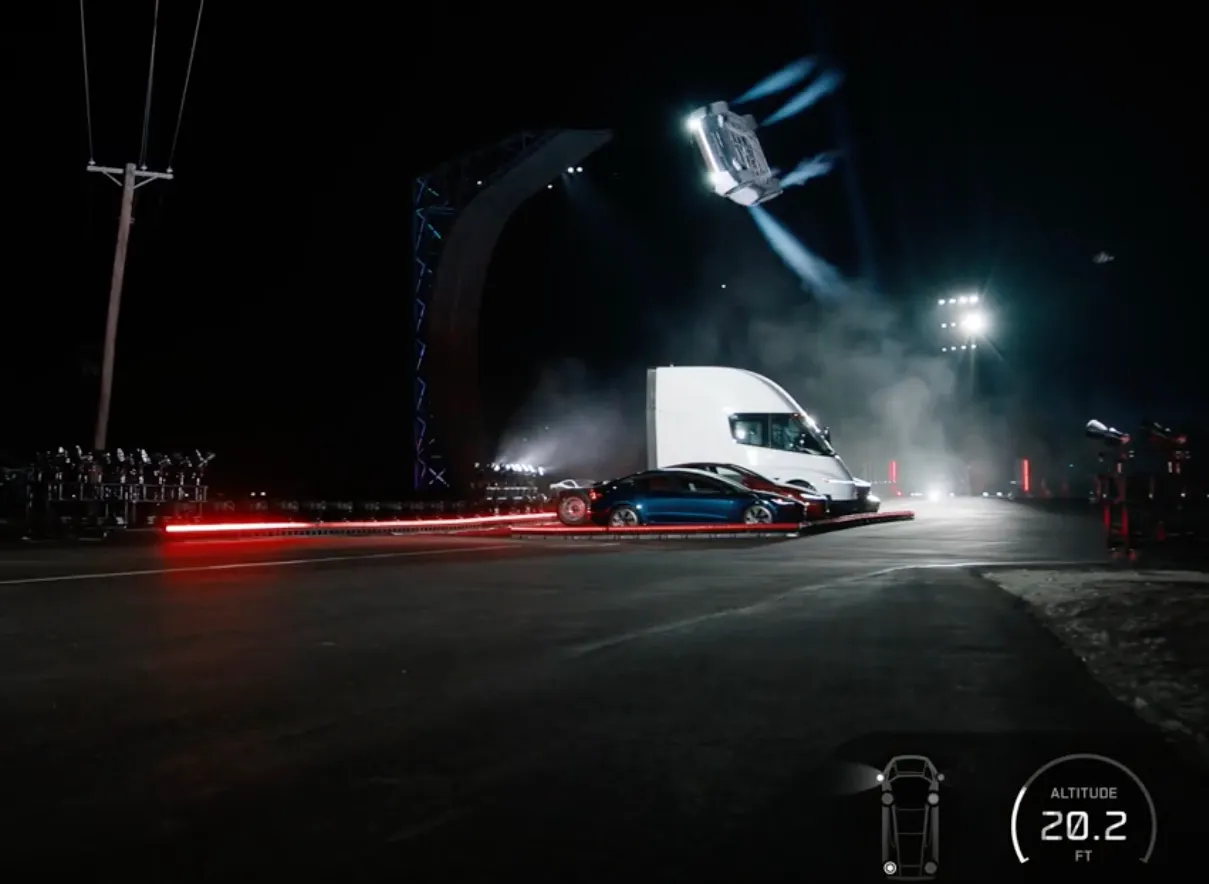
For the encore, the Roadster rolled towards a line of parked Teslas: a Cybercab, a Cybertruck, a Tesla Semi, a Model Y and a Model 3. With no ramp at all, its thrusters lifted it clean over the lot. Mid-air, side jets spun it through a full barrel roll before it touched down level on the other side. Tesla calls this one "the kickflip."
There was nobody inside. Musk said Tesla made that choice to make sure nobody got killed.
The car also did a boosted sprint from 0 to 60 mph (0–97 km/h) that Tesla timed at 0.81 seconds. Fact-checkers at Snopes reviewed the footage, together with videos shot by people in the audience, and found nothing to suggest it was faked.
How does a car fly?
It doesn't fly so much as hop with style. Three bits of tech do the work:
- Cold-gas thrusters. This is the SpaceX part. Tesla engineering VP Lars Moravy said the car uses 10 thrusters fed by 600 litres of compressed air, stored in carbon-fibre pressure tanks packed into every spare corner of the car. Tesla claims the thrusters push four to five times harder than the tyres can grip, which is how it gets past the limit that caps every other car's acceleration.
- Suction fans. Fans pull air out from under the car, creating enough grip to hold it upside down, even when it's standing still. The British McMurtry Spéirling track car showed the same trick last year.
- Active wings. In Track Mode, the car lowers itself and deploys wings driven by the same motors Tesla built for its Optimus robot.
The design has changed a lot since 2017, too. It's sharper and more angular now, with hidden headlights and a full-width taillight. Tesla says it took inspiration from the SR-71 spy plane and the F-35 fighter jet.
Three versions, very different cars
Version | Seats | 0–60 mph (0–97 km/h) | Extras | How to get one |
|---|---|---|---|---|
Performance | 2 | under 1.6 s | Active aero, suction fans | Reservation |
Thrust | 2 | under 0.9 s | Rear cold-gas thrusters | Limited release |
Rocket | 1 | under 0.59 s | Thrusters all around the car | Invite only |
Tesla quotes a range of over 300 miles (about 480 km) and a top speed of over 230 mph (about 370 km/h). Here's the important detail: the flips and jumps need the Rocket version, which Tesla says isn't approved for public roads.
The catch
As jaw-dropping as the show was, there's plenty of fine print:
- No price. Tesla reopened reservations at the same $50,000 it asked for in 2017, but didn't say what any version will cost.
- No car until 2028. Musk's production target is now 2028, from a company that originally promised 2020.
- Smaller promises. In 2017, Tesla promised about 620 miles (1,000 km) of range and seats for four. The new car is quoted at around half that range, with two seats at most.
- Short bursts. Every stunt used only a few seconds of thrust, and the compressed air has to be refilled. How often you can actually pull this off is an open question.
Musk wasn't finished, either. He floated the idea of jumping the Roadster across Snake River Canyon, the gorge Evel Knievel famously tried to cross in a rocket in 1974.
Why this matters
- The traction limit just got broken. Every car's acceleration is capped by how much grip its tyres have. Thrusters sidestep that entirely, which is why Tesla can claim sub-second sprints.
- Tesla and SpaceX are closer than ever. The venue, the thrusters and the space-themed details all tie the two Musk companies together.
- Halo car, not daily driver. Musk himself has said the Roadster probably won't move the needle on revenue. It's a rolling billboard for what Tesla's engineers can do.
The takeaway: The Roadster reveal was the most spectacular car launch in years, and the engineering is real. But the stunts live on an invite-only, not-road-legal version, and the car you can reserve is still two years away. Enjoy the show; hold on to your deposit until there's a price tag.
Watch it for yourself
Here's the short clip of the kickflip over five Teslas, from Tesla's own YouTube channel:
▶ Watch: Tesla Roadster "kickflip" (YouTube)
Want the whole thing? The full livestream jumps straight to the kickflip here.
Sources: TechCrunch · Electrek · Road & Track via Yahoo Autos · Snopes · Tesla